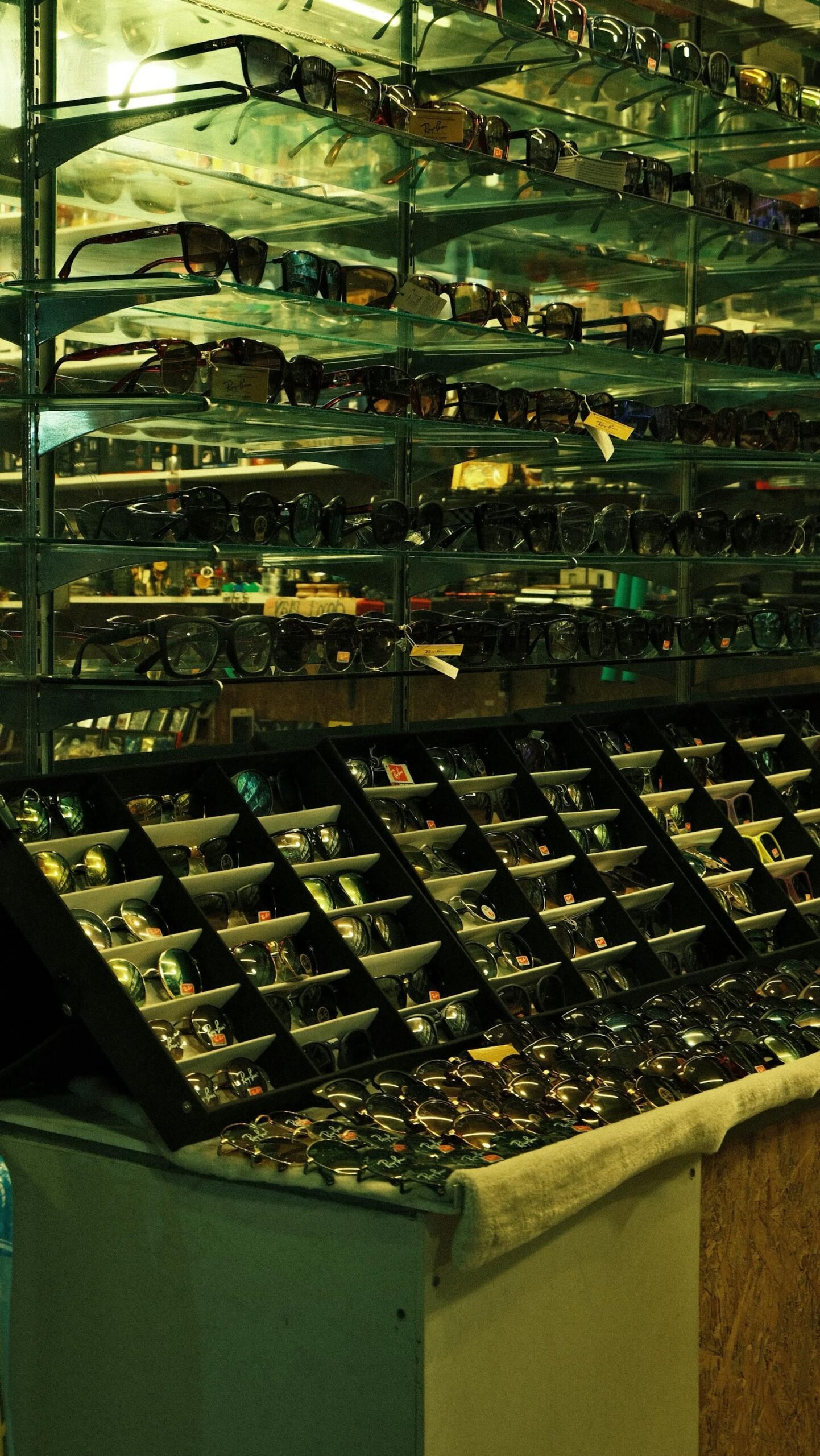

You’ve done the eye test. You’ve sold the dispense. The frames have come back from the lab, the lenses are right, the case is on the shelf with the patient’s name on a little sticker. And there it sits. For three weeks. Sometimes longer.
If you run an independent optician practice in the UK, you already know this is one of the quietest revenue leaks in the business. Uncollected glasses tie up cash, eat staff time, fill shelf space, and slowly erode the patient relationship you worked hard to build. It’s not glamorous. Nobody writes case studies about it. But the practices that handle it well consistently outperform the ones that don’t.
This guide is for the practice owner or manager who has had enough of staring at a tray full of unclaimed jobs every Friday afternoon. It walks through why patients delay collection, what good looks like, and the specific systems you can put in place to get glasses on faces faster — without nagging anyone or hiring more staff.
Why Uncollected Glasses Are a Bigger Problem Than They Look
On the surface, an uncollected pair is just a delay. The patient will turn up eventually, right? Most do. But the cost of that delay compounds in ways that don’t show up on a single line of your P&L.
Cash flow is the obvious one. You’ve paid the lab. You’ve paid for the frame. You’ve paid the staff time to dispense and to chase. The patient hasn’t paid the balance — or if they have, you’ve been sitting on lab cost for weeks with no completion to show for it. Across thirty or forty uncollected jobs at any given time, that’s real working capital frozen on a shelf.
Then there’s the staff cost. Every time someone phones a patient to remind them their glasses are ready, that’s three to five minutes of frontline time. Add a follow-up text, a second call, a left voicemail, and you’re easily looking at fifteen to twenty minutes per stubborn job. Multiply by a busy practice and you’ve got the equivalent of a part-time role spent just chasing collections.
The bit that hurts most, though, is the relationship damage. A patient who waits a month to collect is a patient who’s cooled off. They’re less likely to praise the experience to a friend. Less likely to come back next year without prompting. Less likely to add a second pair, sunglasses, or contact lenses on collection. The dispense moment is when warmth peaks. The longer the gap, the colder it gets.
Why Patients Don’t Come Back to Collect
Before you can fix anything, it helps to be honest about the reasons. Patients aren’t lazy or rude. They’re busy, and your text message about glasses being ready is competing with school runs, work meetings, energy bills, and a hundred WhatsApp notifications.
The most common reasons patients delay collection in UK independent practices look something like this. They forgot. They meant to come in but the working week got in the way. They’re waiting for a Saturday and last Saturday was Easter weekend. They’re not sure if they need to bring anything, or whether they need to book in. They had a bad experience last time queueing at the front desk and don’t fancy another. They’re slightly worried the prescription will feel “off” and they’re putting off the moment of truth. Or they’ve simply forgotten which practice the glasses are at because they shopped around.
Notice that none of these are about price or product. They’re about friction, communication, and confidence. Which means they’re all fixable from your side of the counter.
What “Good” Looks Like for Collection Rates
Most independents we speak to don’t measure collection time at all. They have a vague sense of “we’ve got a lot on the shelf” but no number. If you don’t have a benchmark, you can’t manage it.
A reasonable target for a well-run independent practice is that 80% of single vision and ready-to-wear jobs are collected within seven days of being marked ready, and 80% of varifocals within ten to fourteen days. Anything older than three weeks should be treated as a red flag and worked actively. Anything older than six weeks needs a decision: chase one final time, refund the deposit, or recycle the frame.
If you can shave even three days off your average collection time, you’ll feel it in three places. Cash conversion gets faster. Staff stop drowning in chase calls. And patients leave the dispense moment with the glasses you sold them in mind, not in the back of a drawer six weeks later.
Build a Three-Touch Collection Workflow
The single most useful change most practices can make is to stop treating collection as a one-off “we’ll text them when it’s in” event, and start treating it as a short, structured workflow. Three touches is plenty.
Touch 1: The “Ready” Notification
The moment a job is marked ready, a notification goes out — same day, ideally same hour. Text or WhatsApp beats email by a wide margin. Keep the message short. Tell them their glasses are ready, where to come, opening hours, and whether they need to book or can walk in. If walk-in is fine, say so explicitly. The biggest reason patients delay is uncertainty about whether they’re “supposed” to do something first.
If you’re using a practice management system that handles this automatically, set the trigger to fire on the “ready for collection” status change. If you’re still doing this by hand, build it into the end-of-day checklist for whoever signs off received jobs from the lab.
Touch 2: The Three-Day Nudge
If they haven’t collected in three working days, send a second message. Friendlier, shorter. “Just a quick reminder your new glasses are ready when you are. Pop in any time during opening hours.” Don’t apologise for chasing — patients genuinely appreciate the prompt and most will respond within a day.
This is where most practices stop. Don’t.
Touch 3: The Personal Call (Day 7-10)
If they’re still not in by day seven to ten, this is the call from a real person. Not a generic “are you coming in” but a warm, useful one: “Hello, it’s Sarah from the practice. Just checking your new varifocals haven’t slipped your mind — they’re sitting here waiting for you. Would it help if I booked you in for a quick collection appointment so you don’t have to queue?” Offering a booked slot does two things: it removes the friction of “what if it’s busy”, and it commits the patient to a time on the calendar.
That third touch is the one that consistently moves the needle. It’s also the touch most practices skip because it’s the most labour-intensive. Done well, three to five minutes per stubborn job recovers a lot of value.
Use Your Practice Management Software to Do the Heavy Lifting
Doing all of this by hand on a sticky-note system is the fastest way to give up by week three. The whole point of a modern practice management system is to take the routine collection workflow off the team’s plate so they can focus on the human-facing parts.
If you’re using Raven Vision’s appointment and patient management features, you can set the “ready” notification to fire automatically when the lab job status changes. The three-day nudge becomes a scheduled rule. The day-seven list of stubborn jobs becomes a daily worklist for your front-of-house lead — they open the screen, see the names, see when each was first notified, and work down the list.
What you want to avoid is a stack of independent tools — one system for the lab, another for SMS, another for appointments, a fourth for patient records — that don’t talk to each other. That’s how messages get missed and the same patient gets chased twice in a day. A single record per patient with the collection status visible on the same screen as their last eye test, their dispense, and their contact preferences is what makes a three-touch workflow actually run itself.
Make Collection Itself a Better Experience
Once the patient does turn up, the collection experience is your second chance to lock in the relationship. Treat it like the appointment it is, not a bag-and-go transaction.
Book it. A five-minute collection slot in the diary protects the patient’s time and gives you a chance to do it properly. Walk-in is fine for ready-to-wear single vision, but for varifocals, complex prescriptions, contact lens trials, or first-time wearers, a booked slot is worth its weight.
Adjust the frame. Sit the patient down at a properly-lit bench, check fit, check pantoscopic tilt, check vertex distance. This is the moment they decide whether they trust the dispense. Five extra minutes here saves fifty minutes of returns and re-adjustments later.
Talk through the lenses. Especially varifocals. Set expectations on the adaptation period, what’s normal, what’s not, and when to come back. Patients who know what to expect very rarely return demanding remakes.
Capture the moment. If they’re delighted with the new specs — and most are when the dispense was good — that is exactly the right time to ask if they’d consider leaving a Google review, or referring a friend, or booking in for a sunglasses dispense. The dopamine of new glasses is real. Use it.
Handle the Long-Tail Stubborn Cases
Even with a sharp three-touch workflow, you’ll always have a small percentage of jobs that drag on. The patient went on holiday. They got ill. They moved house. Life happened. You need a clean policy for what happens after week three.
A workable approach: at three weeks, the job goes onto a weekly “long-tail” list reviewed every Monday. The branch lead makes one final call and one final text. At six weeks with no response, the patient is offered three options — collect within seven days, switch to delivery (if you offer it, which more independents are starting to), or have the deposit refunded with the order cancelled.
This sounds harsh on paper. In practice, patients respect the structure. The ones who genuinely want the glasses turn up. The ones who’ve changed their mind get clean closure. The ones you’d never have heard from again stop occupying mental space and shelf space. Your stock stops bloating with abandoned jobs and your team stops carrying the emotional weight of chasing forever.
Add a Delivery Option (And Charge for It)
One change a growing number of UK independents are making is offering a paid delivery option for ready jobs. Royal Mail Tracked 24, Evri, or local courier — somewhere between £6 and £12 — and the glasses arrive at the patient’s home or workplace within 24 to 48 hours.
It won’t suit every patient or every job. Varifocals and complex prescriptions still need an in-person collection. But for repeat patients with stable prescriptions, contact lens orders, or single vision distance jobs, delivery removes the single biggest barrier to fast collection — having to physically come in. You get paid for the convenience, the patient gets the glasses sooner, and your shelf clears faster. Everybody wins.
Track the Number, Every Month
What gets measured gets managed. If your practice management system can show you the average days from “ready” to “collected” by month, by branch, and by job type, you’ve got the lever you need to keep the workflow honest.
Three numbers worth watching every month: average days to collection, percentage of jobs collected within seven days, and number of jobs sitting longer than three weeks. Pin these to the staff room wall. Talk about them at the monthly team meeting. Celebrate the months they move in the right direction. The team will tighten up the workflow without you having to micro-manage it.
If you want a structured way to look at these numbers alongside the rest of your practice KPIs, our reporting dashboards pull collection time data automatically — no spreadsheets, no manual counts. You get to spend the management time on decisions, not on data entry.
What to Stop Doing
A few habits that actively hurt collection rates and that we see in practices all the time. Worth being honest about.
Stop relying on email-only notifications. Open rates on email for collection messages are dismal compared to SMS or WhatsApp. If your only notification is an email, assume half your patients never see it.
Stop sending “your glasses are ready” without saying when you’re open or whether they need to book. Make the patient’s next step obvious. Friction kills collection.
Stop letting the chase calls fall to whoever has a quiet five minutes. That’s how the chasing doesn’t happen. Make it one named person’s daily task, even if it’s only fifteen minutes.
Stop apologising in the chase message. “Sorry to bother you” trains the patient to think the reminder is intrusive, when actually most are grateful for it.
Stop carrying jobs older than six weeks on the active shelf. Have the conversation, refund or deliver, and clear the deck.
The Bigger Picture
Collection rate is one of those quiet operational metrics that almost no patient will ever notice, but every patient is shaped by. It affects how much cash you’ve got in the bank, how stretched your front-of-house team feels, how warm the patient relationship is at the end of the dispense journey, and how much of your stock budget is actually working for you versus sitting on a shelf.
The good news is that fixing it doesn’t require new hires, new tech that doesn’t exist, or a complete change in how you run the practice. It requires three structured touches, one named owner, and a system that doesn’t make your team do everything by hand. That’s it.
If you’d like to see how a modern practice management system can run that workflow for you — automated notifications, scheduled nudges, daily worklists, and the reporting to back it up — book a 20-minute demo with our team. We’ll walk you through how Raven Vision handles collections specifically, with no sales fluff. Built by an optometrist who runs three practices himself, so the workflow comes from the floor, not from a slide deck.
Your shelf will thank you. So will your bank balance.