
If you’re running an independent optician practice in the UK and you’re not yet offering myopia management, you’re leaving money on the table — and more importantly, you’re missing a chance to genuinely change young patients’ lives.
Childhood myopia is climbing fast. The numbers aren’t subtle anymore. Roughly one in three children in the UK now has some degree of short-sightedness, and that figure has been trending upward for over a decade. The days of simply prescribing a stronger pair of glasses every twelve months and sending kids on their way are, frankly, behind us.
Myopia management — the active clinical approach to slowing down how quickly a child’s eyes get worse — has gone from niche interest to mainstream practice. And for independent opticians, it represents one of the most meaningful service additions you can make right now.
Here’s what you need to know, what it looks like in practice, and why it matters for your patients and your business.
What’s Actually Driving the Myopia Epidemic?
You already know the clinical picture. More screen time, less outdoor play, longer periods of sustained near work. The pandemic accelerated things, and the habits stuck. Children’s eyes are growing too long, too fast, and the consequences of high myopia later in life — retinal detachment, myopic maculopathy, glaucoma — are serious.
But here’s what makes 2026 different from even two years ago: we now have better evidence, better tools, and better regulatory backing for intervening early.
The UK and Ireland’s modified Delphi consensus on myopia management, published through the College of Optometrists, gave practitioners a clear clinical framework. The MHRA approved low-dose atropine for paediatric myopia in late 2025. And the optical lenses and contact lenses designed specifically for myopia control have matured significantly — MiYOSMART spectacle lenses and MiSight daily contact lenses both have robust clinical data behind them now.
The question isn’t whether myopia management works. It does. The question is whether your practice is set up to deliver it.
What Myopia Management Actually Involves Day-to-Day
Let’s strip away the conference-talk polish and talk about what this looks like on a Tuesday morning in your practice.
A parent brings in their 8-year-old. Last year the child was -1.50 in both eyes. This year they’re -2.25. The parent’s worried because their older child ended up at -6.00 by age sixteen and they don’t want a repeat.
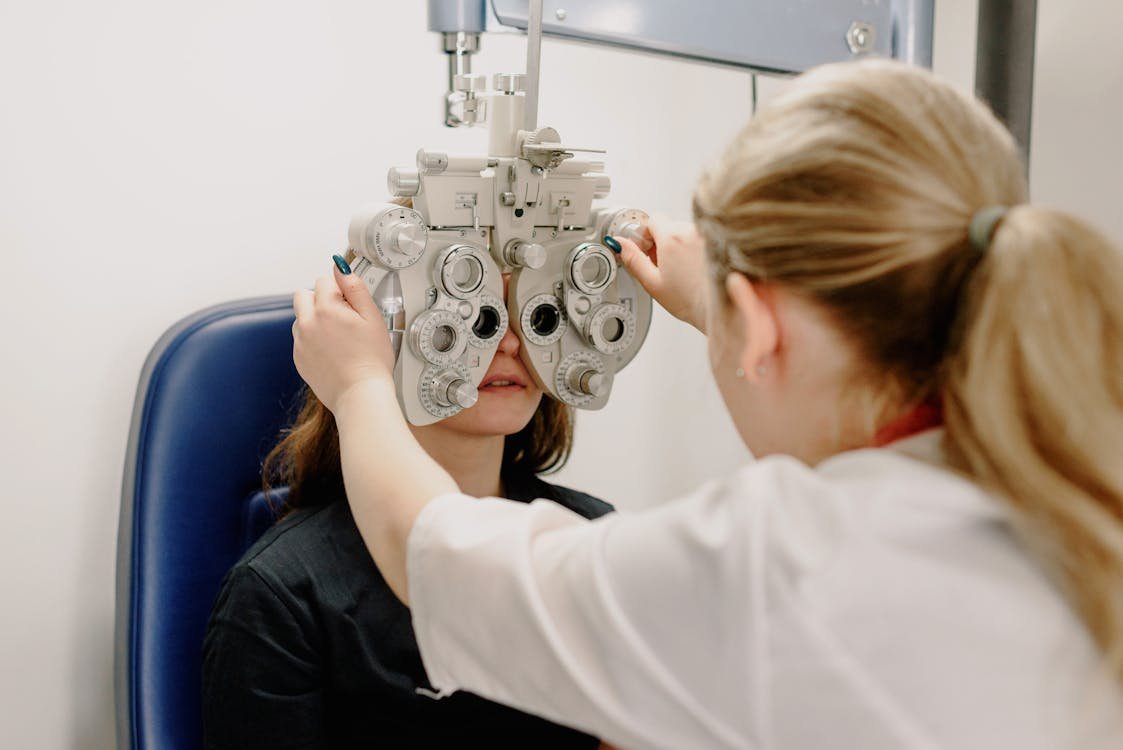
In a traditional workflow, you’d update the prescription, dispense new glasses, and book them back in twelve months. In a myopia management workflow, you’d do something different. You’d measure axial length (ideally), assess risk factors, discuss the options with the parent, and start a management plan.
That plan might look like:
- MiYOSMART spectacle lenses — these use D.I.M.S. technology to create a myopic defocus signal while correcting distance vision. They look like normal glasses to the child, which matters enormously for compliance.
- MiSight 1 day contact lenses — daily disposable soft lenses with a dual-focus design. Clinically proven to slow myopia progression by around 59% over three years. Children as young as eight can wear them successfully.
- Low-dose atropine eye drops — now MHRA-approved, though supply and prescribing pathways are still settling. Atropine at 0.01% to 0.05% concentrations has shown meaningful slowing of axial elongation with minimal side effects.
- Orthokeratology (ortho-k) — overnight rigid lenses that reshape the cornea temporarily. Effective but requires more patient commitment and careful fitting. Better suited to some children than others.
The real clinical skill is matching the right intervention to the right child. Not every family wants contact lenses. Not every child is compliant with drops. Your job is to have the conversation, present the options honestly, and monitor progress over time.
The Business Case for Independent Practices
Here’s where it gets interesting for practice owners.
Myopia management is a premium service. It sits outside the standard GOS pathway — the NHS optical voucher covers a fraction of the cost of specialist myopia control lenses. That means it’s a private-pay service, typically charged as a monthly or annual management fee plus the cost of the correction.
Most practices offering myopia management are charging somewhere between £30 and £60 per month for a management programme, which usually includes regular monitoring appointments, axial length measurements, and the contact lenses or spectacle lenses themselves. Some practices charge separately for the lenses and the management fee.
Let’s run some rough numbers. If you enrolled just 20 children into a myopia management programme at an average of £45 per month, that’s £900 a month — £10,800 a year in recurring revenue. From twenty patients. And these are patients who come back regularly, who you build deep relationships with, and who refer other families because this is a service they genuinely value.
Compare that to the margins on a standard GOS sight test and a pair of NHS-voucher-assisted frames.
For independent practices especially, this is a differentiator. The multiples aren’t offering this at scale yet. Most parents who’ve heard about myopia management are actively seeking out independent practices that specialise in it. You’re not competing on price here — you’re competing on expertise, care, and outcomes.
Setting Up Your Practice for Myopia Management
You don’t need to overhaul everything overnight. But there are a few foundations worth getting right.
Clinical equipment
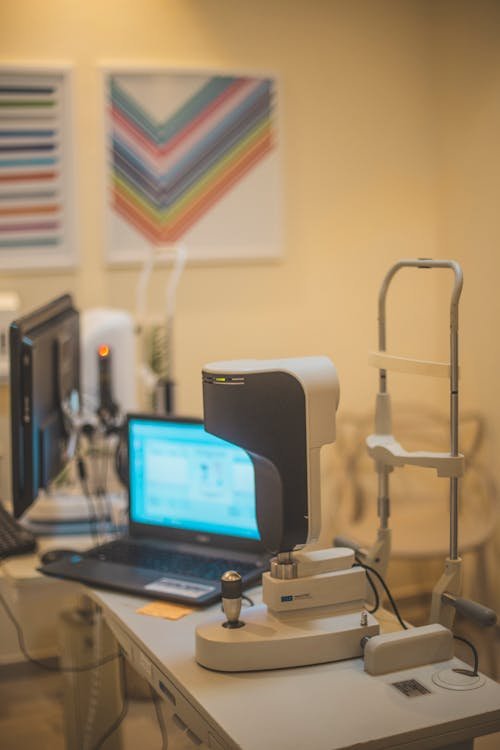
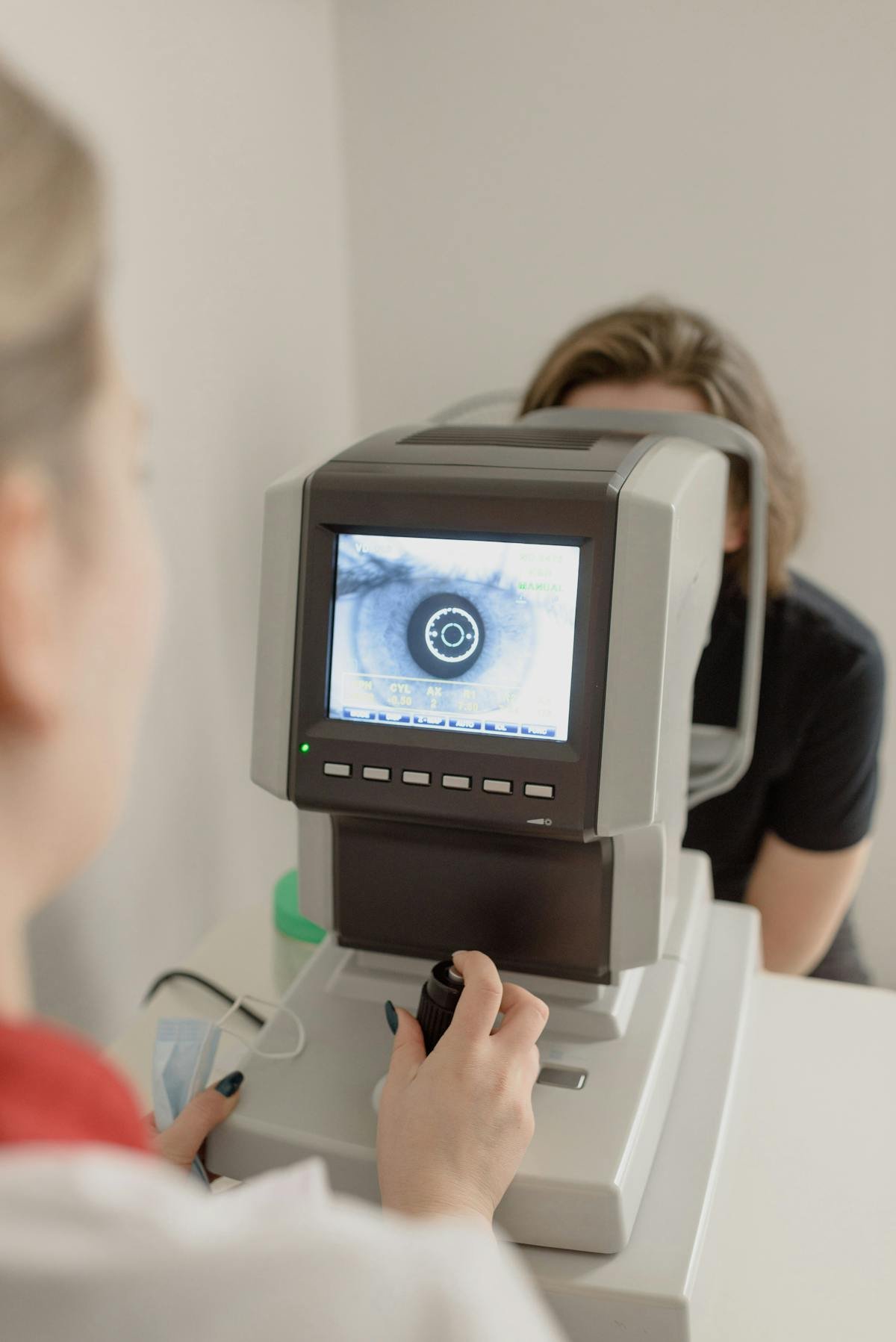
Axial length measurement is becoming the gold standard for monitoring myopia progression. Devices like the Myopia Master or the Lenstar give you precise biometric data that’s far more reliable than refraction alone for tracking how a child’s eye is changing. If you can’t invest in a dedicated biometer immediately, you can start with careful refraction records and upgrade when the patient numbers justify it.
Patient records and tracking
Myopia management generates more data per patient than a standard sight test. You’re tracking refraction changes, axial length measurements, compliance notes, parent communication, and treatment adjustments over months and years. Your practice management system needs to handle this cleanly — not buried in free-text notes where it gets lost, but structured so you can see a child’s progression at a glance.
This is where having a modern, cloud-based system matters. If your current PMS makes it painful to pull up a patient’s full history quickly, or if you’re still flipping through paper records, myopia management will expose those gaps fast. You need to see trends, set recall reminders, and track which children are due for their next review — all without admin staff spending hours on manual follow-up.
Appointment scheduling
Myopia management patients come back more frequently than standard patients. Typically every six months for monitoring, sometimes quarterly in the first year. Your appointment scheduling system needs to handle recurring recalls efficiently. Automated reminders help enormously — parents are busy, and a quick text reminder three days before an appointment cuts your no-show rate significantly.
Staff training
Your dispensing opticians and reception team need to understand what myopia management is and why it matters. They’re often the first point of contact when a concerned parent phones up. If your reception team can confidently explain that you offer a specialist myopia management service, book an initial consultation, and answer basic questions, you’ll convert far more enquiries.
Parent education materials
Parents are searching online for information about their child’s myopia. Having clear, jargon-free content on your practice website — explaining what myopia management is, what options you offer, and what a typical programme looks like — turns search traffic into consultations. A well-designed practice website with integrated online booking makes it easy for parents to take that next step.
Common Concerns (And How to Address Them)
“I don’t have enough young patients to justify it.”
You might be surprised. Once you start asking about family history of myopia and flagging children whose prescriptions are progressing quickly, you’ll identify candidates you didn’t realise you had. And word spreads — parents talk to other parents. One happy myopia management family at the school gate is worth more than any Facebook ad.
“The equipment cost is too high.”
You can start without an axial length biometer. Use careful serial refraction, discuss risk factors, and begin with MiYOSMART lenses or MiSight contacts. Invest in the biometer once you’ve got 10-15 patients enrolled and the revenue supports it. Don’t let perfect be the enemy of good.
“Parents won’t pay for it.”
Some won’t. But many will — especially when you explain the lifetime cost of high myopia versus the cost of management now. A child who reaches -8.00 faces a significantly higher risk of sight-threatening complications. When you frame myopia management as an investment in their child’s long-term eye health, most parents understand the value. The ones who’ve seen their own prescription climb year after year are often the most motivated.
“I’m not confident enough in the clinical side.”
Fair point, and easily fixed. The AOP, College of Optometrists, and various CET providers all offer myopia management training. CooperVision runs excellent MiSight fitting workshops. Hoya offers training on MiYOSMART. You don’t need a postgraduate qualification to start — you need a solid understanding of the evidence, the products, and the patient journey.
The GOC Angle: Clinical Governance Matters
One thing to get right from the start: your clinical governance. The General Optical Council expects robust record-keeping, clear consent processes, and evidence-based practice when you’re offering myopia management. This isn’t a box-ticking exercise — it protects you and your patients.
Make sure your consent forms are thorough. Document your clinical reasoning for choosing a particular treatment approach. Record every measurement, every conversation with parents, every treatment adjustment. If a parent ever questions why their child was put on a particular pathway, you want clear, contemporaneous records that show exactly what was discussed and decided.
This is another area where your practice management software earns its keep. Being able to record clinical notes efficiently, attach consent forms to patient records digitally, and generate reports showing a child’s progression over time isn’t just convenient — it’s essential for good governance.
Marketing Your Myopia Management Service
You don’t need a massive marketing budget to attract myopia management patients. What you need is visibility where parents are already looking.
Start with your Google Business Profile. Make sure “myopia management” appears in your services and business description. Parents searching “myopia management near me” or “children’s eye specialist [your town]” should find you.
Write a dedicated page on your practice website explaining your myopia management service. Keep it warm, clear, and parent-friendly. Avoid clinical jargon where you can. Explain the process step by step — what happens at the first appointment, what the options are, how much it costs, how often they’ll come back.
Ask happy patients (well, their parents) for Google reviews specifically mentioning myopia management. These reviews show up in local search results and carry enormous weight with other parents researching their options.
Consider running a short talk at a local primary school about children’s eye health. You’re not selling anything — you’re educating. But you’re also positioning yourself as the local expert in children’s vision. When those parents notice their child squinting at the whiteboard, they’ll remember you.
The Bigger Picture: Why This Matters Beyond Revenue
Myopia management is one of those rare areas where doing the right thing clinically and doing the right thing for your business align perfectly. You’re genuinely improving outcomes for children. You’re building deeper, longer-lasting patient relationships. You’re differentiating your practice from the chains. And you’re generating sustainable recurring revenue that doesn’t depend on foot traffic or seasonal promotions.
For independent opticians who’ve been wondering what their “next thing” should be — the service that sets them apart, that gives parents a reason to choose them over the multiple down the road — myopia management is it.
The evidence is there. The tools are there. The demand is there. The only question left is whether you’re going to be the practice in your area that offers it, or the one that wishes they had.
Ready to Streamline Your Myopia Management Workflow?
If you’re considering adding myopia management to your practice, the right practice management software makes all the difference. Raven Vision is built specifically for UK independent opticians — with structured clinical records, automated appointment recalls, patient communication tools, and online booking integration that takes the admin burden off your shoulders so you can focus on patient care.
At £149/month with three months free and no lock-in, it’s designed to pay for itself from day one. Book a demo and see how it fits your practice.