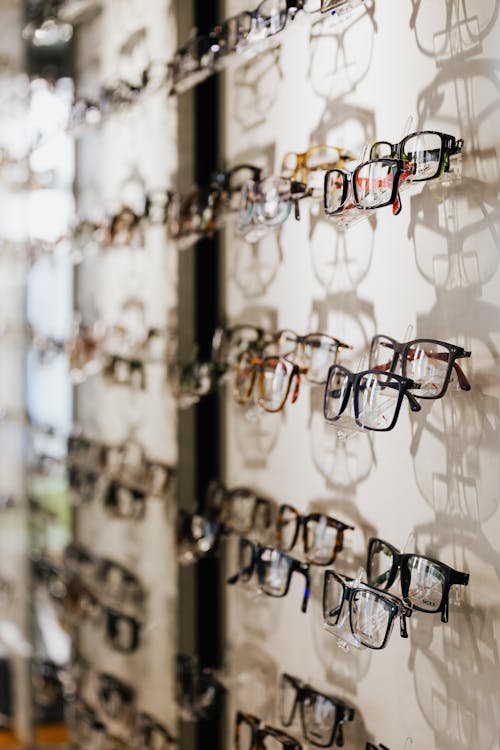

If you run an independent optician practice, you already know that your frame stock is one of your biggest investments. Hundreds — sometimes thousands — of frames sitting on boards and in drawers, each one tying up capital until someone walks out with it on their face. Yet for most independents, managing that stock still relies on gut feeling, scribbled notes, or spreadsheets that haven’t been updated since last quarter.
That’s a problem. Because when stock management falls apart, everything else follows: you over-order frames that don’t sell, run out of the ones that do, lose track of what’s actually on the boards versus what’s in storage, and spend hours doing manual stock checks that eat into your clinical time.
This guide breaks down how to get a proper grip on your frame inventory — practically, without needing to hire a stock manager or spend weekends counting frames.
Why Frame Stock Management Matters More Than You Think
Let’s start with the numbers. The average independent optician practice in the UK holds somewhere between £15,000 and £40,000 worth of frame stock at any given time. For a lot of practice owners, that’s the single largest non-property asset in the business.
And yet, how many of us actually know what’s performing and what’s gathering dust?
Poor stock management doesn’t just mean wasted money on unsold frames. It also means:
Lost sales. A patient wants a particular style and you don’t have it in stock — or worse, you think you have it but can’t find it. They walk out and buy online instead.
Cash flow pressure. Money locked up in slow-moving stock is money you can’t put into marketing, staff, or equipment. For a small independent, that can be the difference between a comfortable month and a stressful one.
Wasted clinical time. If you or your dispensing opticians are spending time hunting for frames, counting stock, or trying to remember what was ordered last month, that’s time not spent with patients.
Supplier relationship issues. When you can’t quickly see your order history or what’s selling, negotiations with suppliers become guesswork. You lose leverage you didn’t even know you had.
The Common Mistakes Independent Opticians Make With Stock
Before we get into the solutions, here are the patterns I see time and again across independent practices:
1. Ordering Based on Gut Feeling
You liked the look of a range at an exhibition, the rep was persuasive, or you just “felt” like the practice needed more rimless options. There’s nothing wrong with instinct — you know your patients — but instinct without data leads to boards full of frames nobody’s picking up.
2. Not Tracking What Actually Sells
If you don’t have a system that records which frames are being dispensed, you’re flying blind. I’ve seen practices where the owner was convinced a particular brand was their best seller, only to discover — once they actually tracked it — that it accounted for less than 5% of dispensing.
3. Irregular Stock Takes
Doing a full stock check once a year (or worse, never) means you’re working with outdated information for months. Frames go missing, get damaged, or get moved between locations without anyone updating the records.
4. Keeping Dead Stock Too Long
Every practice has them: frames that have been sitting on the board for two years without moving. They take up prime display space and give patients a stale impression of your offering. But getting rid of them feels like writing off money, so they stay.
5. Disconnected Systems
Your patient records are in one place, your orders in another, your stock count on a spreadsheet, and your supplier invoices in a filing cabinet. Nothing talks to anything else. When it’s time to reorder or review performance, you’re pulling data from three different sources and hoping it matches up.
Building a Frame Stock Management System That Works
You don’t need to transform your practice overnight. But you do need a structured approach. Here’s what that looks like in practice:
Start With a Clean Count
Before anything else, you need to know exactly what you’ve got. Set aside a morning — ideally when the practice is closed — and do a proper physical stock take. Every frame on the boards, in drawers, in storage, in the window display. Record brand, model, colour, size, and cost price.
Yes, it’s tedious. But you only need to do the big one once. After that, if you maintain the system properly, you’ll be doing quick spot-checks rather than full-day counts.
Categorise Your Stock
Not all frames are equal. Group them into categories that make sense for your practice. Some useful ones:
By price band: Budget (under £80), mid-range (£80–£180), premium (£180+). This helps you see where your stock investment is concentrated and whether it matches your patient demographic.
By type: Single vision, varifocal-suitable, sunglasses, sports, children’s. Each has different sell-through rates and seasonal patterns.
By brand: Track which suppliers and brands are actually performing for you. This gives you hard data for supplier negotiations.
Track Sell-Through Rate
This is the single most important metric for frame stock management. Sell-through rate tells you what percentage of your stock in a given category actually sold over a period — typically measured quarterly.
A healthy sell-through rate for an independent optician practice is generally around 25-35% per quarter. If a brand or category is below 15%, something needs to change — either the pricing, the display position, or the range itself.
With practice management software that tracks inventory, calculating sell-through becomes automatic. You can see at a glance which brands are earning their board space and which are just decoration.
Set Reorder Points
For your core ranges — the ones you know sell consistently — set minimum stock levels. When stock drops below that level, it triggers a reorder. This prevents the situation where a patient wants a frame you’ve sold three of this month but forgot to restock.
For most independent practices, a sensible minimum stock level for popular models is 2-3 pieces per colour. For less popular lines, 1 is fine — you’re just keeping the display fresh.
Review Monthly, Not Annually
A quick monthly review doesn’t need to take long. Fifteen minutes looking at last month’s dispensing data, checking which frames sold, which didn’t, and whether any categories need attention. That’s it.
The key is making this data easy to access. If pulling a report takes 30 minutes of spreadsheet wrangling, you’ll stop doing it. If it takes two clicks in your practice management system, it becomes a habit.
Dealing With Dead Stock
Every practice has dead stock. The question is what you do about it.
Define a Shelf Life
Set a rule: any frame that hasn’t sold within 12 months needs to be acted on. Not necessarily thrown away — but moved, discounted, or returned to the supplier if possible.
Run Targeted Promotions
A “clearance” section doesn’t have to feel cheap. Frame it as a limited-time offer: “Selected designer frames — 30% off while stocks last.” Patients love a deal, and you’re freeing up cash and board space for stock that’ll actually move.
Renegotiate With Suppliers
If a brand consistently underperforms, talk to your rep. Can they do a stock swap? Will they take returns on unsold pieces? Can you reduce the minimum order quantity? Suppliers would rather keep you happy than lose an account — especially when you’ve got the data to show what’s working and what isn’t.
Donate What You Can’t Sell
Frames that are genuinely past their sell-by date can go to charity. Organisations like Vision Aid Overseas are always looking for donated frames. It’s good for the community and good for your conscience — better than binning them.
Using Technology to Make Stock Management Effortless
Here’s where things get interesting for independent opticians in 2026. The old excuses — “it’s too complicated,” “the software costs too much,” “I don’t have time to learn a new system” — don’t really hold up anymore.
Modern practice management software can handle most of the heavy lifting for you:
Automatic stock updates. When you dispense a frame, it’s removed from your inventory count automatically. No manual adjustment needed.
Supplier order tracking. See what’s on order, what’s been delivered, and what’s outstanding — all in one place.
Sell-through reports. Monthly or quarterly reports that show you exactly which frames are performing, broken down by brand, price band, or category.
Low stock alerts. Get notified when popular lines drop below your reorder point, so you never miss a sale because something’s out of stock.
Integration with patient records. See the full picture — which patients bought which frames, when they’re due back, and what they might want next time.
Raven Vision was built inside real optician practices, so the inventory management tools are designed around how independents actually work — not how a software company thinks they should work. At £149 a month with no lock-in, it’s designed to pay for itself by helping you make smarter stock decisions.
A Simple Framework You Can Start This Week
You don’t need to overhaul everything at once. Here’s a five-step plan you can put in place starting today:
Step 1 (This week): Do a complete physical stock count. Yes, all of it. Record everything in a spreadsheet or your practice management system.
Step 2 (This week): Identify your dead stock — anything that’s been on the board for 12+ months without selling. Move it to a clearance display or contact the supplier about returns.
Step 3 (Next week): Set up basic tracking. If you’re using practice management software, make sure every dispensed frame is being recorded against your stock. If you’re on spreadsheets, create a simple log.
Step 4 (End of month): Run your first monthly review. Which brands sold well? Which didn’t? Are any categories over- or under-stocked relative to demand?
Step 5 (Ongoing): Use the data to inform your next order. When a supplier rep visits, have your numbers ready. You’ll be amazed at how much more confident — and how much better — those conversations become when you’ve got data backing every decision.
The Bottom Line
Frame stock management isn’t glamorous. Nobody became an optometrist because they were passionate about inventory spreadsheets. But for independent practice owners, getting this right is one of the simplest ways to improve cash flow, reduce waste, and make better buying decisions.
The practices I’ve seen do this well share two things: a system that makes tracking easy, and the discipline to review the data regularly. Get those two pieces in place, and you’ll wonder how you ever managed without them.
If you’re spending more time counting frames than fitting them, it might be time to look at how your practice management software handles stock. Book a quick demo with Raven Vision and we’ll show you how practices like yours are getting their inventory under control — without adding hours to your week.