
Ask any optometrist which condition they see most and rarely feel they’ve “finished”, and blepharitis will be near the top. It turns up in the sight test, in the contact lens aftercare chair, in the walk-in who says their eyes “feel gritty all the time”. Most of us reach for the same advice, hand over a leaflet, and move on to the next patient.
That’s a missed opportunity, and not just clinically. Blepharitis is chronic, it comes back, and the patients who have it are the ones who keep returning. Done well, it’s one of the best examples of what an independent practice can do that a hurried multiple can’t: take the time, explain it properly, and follow it up. This post is about how to do that without it eating your diary.
Why Blepharitis Deserves More Than a Leaflet
Blepharitis is inflammation of the eyelid margins. It isn’t dangerous in the way a retinal detachment is, so it gets filed under “minor”. But ask the patient. Sore, red, itchy lids, crusting on waking, a feeling of sand in the eye, contact lenses that were fine last year and are now unbearable by 4pm. It affects work, driving at night, screen use, and whether someone can wear their lenses at all.
Three things make it tricky in practice:
- It rarely resolves. You’re managing it, not curing it. Patients who expect a drop and a fix will be disappointed and may blame you.
- It overlaps with dry eye. Meibomian gland dysfunction (MGD) sits behind a lot of what patients call dry eye, so the two are often the same problem presented differently.
- Adherence is poor. Lid hygiene is boring. Without a reason to keep going, most people stop after two weeks.
Anterior, Posterior and Mixed: Get the Picture Right First
You don’t need a perfect classification to treat it, but it helps to know which end of the lid you’re dealing with, because it changes what you tell the patient.
Anterior blepharitis
This is the front of the lid, around the lash roots. Look for collarettes (those small, waxy cuffs around the base of the lashes), crusting, redness and misdirected or missing lashes. Staphylococcal and seborrhoeic types are the classic descriptions. If you see cylindrical collarettes, think about Demodex mites; they’re common enough that it’s worth getting into the habit of looking.
Posterior blepharitis and MGD
This is the meibomian glands behind the lash line. Press gently on the lower lid and look at what comes out. Clear oil is healthy. Cloudy, thick, toothpaste-like secretion, or nothing at all, tells you the glands are blocked or dropping out. Telangiectasia across the lid margin, a frothy tear film and a short tear break-up time all point the same way.
Mixed disease
Most real patients are a bit of both. Don’t spend five minutes debating the label. Spend them writing down what you actually saw, in a way someone else (or you, in six months) could compare against.
A Consultation Routine That Fits Into a Sight Test Slot
Independent practices don’t have unlimited chair time, so the routine has to be tight. Here’s one that works inside a normal appointment, with a longer follow-up booked only when needed.
Ask two questions early
“Do your eyes feel sore or gritty when you wake up?” and “Do your lids ever stick together or crust?” Those two catch more blepharitis than any symptom questionnaire squeezed into a busy morning. Add “are your contact lenses less comfortable than they used to be?” for lens wearers.
Look before you dilate or drop anything
Do slit lamp lid margin assessment first. Fluorescein can wait until after you’ve seen the lids and glands. Evert the upper lid if symptoms suggest it. Note the lash base, the lid margin, the gland orifices and any obvious corneal staining.
Grade it and record it the same way every time
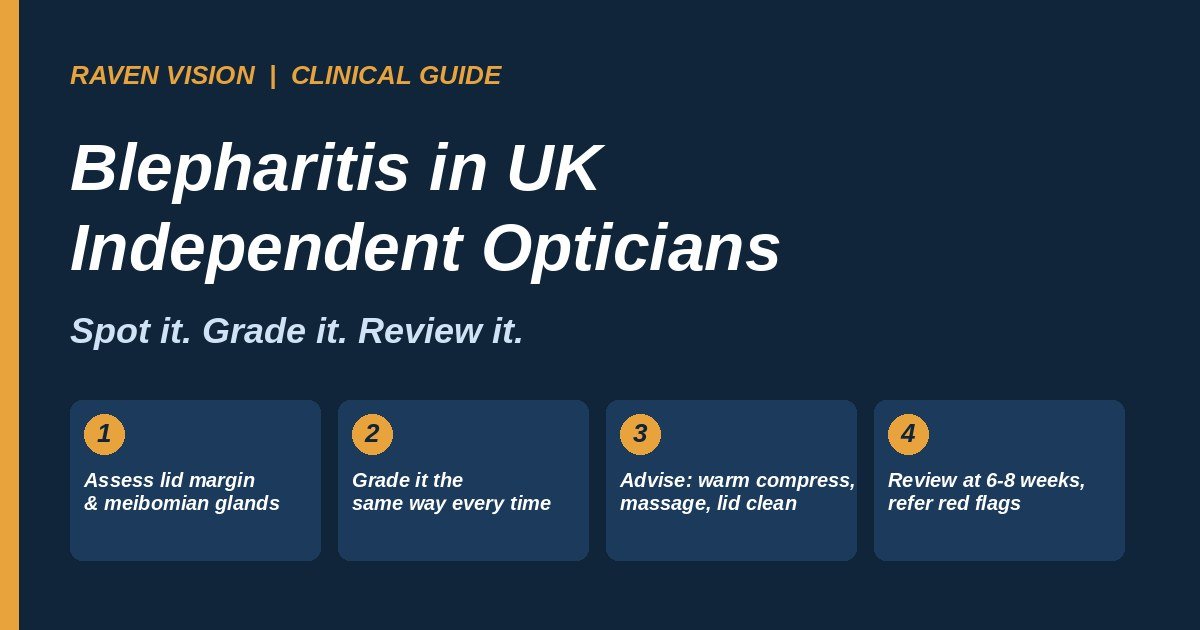
Use a simple scale (for example 0–3 for lid margin, expression quality and corneal staining) and stick to it. The point isn’t the numbers; it’s that next visit you can say “this has improved from a 2 to a 1” and show the patient it’s working. That’s the thing that keeps them doing the warm compresses.
Tell them it’s chronic before they leave
One sentence changes how people respond: “This is something we control rather than cure, like dry skin. It will get better, but it will come back if you stop.” Patients who hear that up front are far less likely to feel let down at the follow-up.
What to Actually Advise
Guidance from the College of Optometrists and NICE’s clinical knowledge summaries broadly agrees on the core approach, and it’s mostly practical and cheap. Check the current versions before you hand anything out, because advice on products and referral thresholds does get updated.
- Warm compress. A few minutes a day, warm enough to soften the oils but not hot. A clean flannel works; a heated eye mask is better because it holds its temperature.
- Gentle lid massage. Done after the compress, pressing towards the lash line to help express the glands.
- Lid cleaning. Along the lash line, using a product you’re happy to recommend. Dilute baby shampoo is the old standby, but many patients find lid wipes or foams easier to stick with.
- Lubricants. A preservative-free option if they’re using drops more than a few times a day.
- Contact lens review. Check the wearing schedule, the solution and the replacement frequency. Daily disposables are often kinder for patients with active lid disease.
- Lifestyle prompts. Screen breaks, humidity, make-up removal. Small things, but they come up in conversation and patients appreciate them.
If you stock lid-care products, display them where people can see them, and have a sensible price on a card. Patients who’ve just been told they have a chronic lid problem are the most receptive audience you’ll get. If you’d rather not sell, say so and recommend a couple of reliable options. Either approach is fine as long as it’s consistent.
Setting Up a Review Pathway Your Team Can Follow
Most of the value in blepharitis care sits in the follow-up. The first visit is the easy bit. The second visit, six to eight weeks later, is where you see whether the advice was followed and decide whether to escalate.
A simple pathway:
- Initial visit: assessment, advice, a leaflet or text with the routine, and a recall booked for 6–8 weeks.
- Review: repeat the same grading. If improved, extend the interval. If not, check adherence honestly, then consider further options within your scope or a referral.
- Maintenance: fold the lid check into the next routine sight test or contact lens aftercare, with the history flagged on the record.
Where this tends to fall apart is the paperwork. The recall gets forgotten, the grading is written in free text nobody can compare, and the “blepharitis” note from last year is buried three screens down. This is exactly what a good electronic patient record should fix: structured lid findings you can compare visit to visit, a condition flag that shows on the front screen, and the review linked to an automated recall so it doesn’t depend on someone’s memory. If you’re running a dedicated clinic, our earlier piece on setting up a dry eye clinic covers the room, the equipment and the pricing side.
When to Refer, and When to Be Suspicious
Most blepharitis is straightforward. A handful of presentations aren’t, and your routine should include a quick mental check for them.
- Corneal involvement. Marginal infiltrates, ulceration, significant staining or neovascularisation need escalating according to your local pathway (many areas have community urgent eyecare services you can refer into directly).
- A persistent chalazion. One that doesn’t settle with conservative management, or keeps recurring in the same place.
- A unilateral, persistent lid problem with lash loss or distortion. Chronic one-sided “blepharitis” that doesn’t behave, especially in an older patient, should make you think about something other than ordinary blepharitis. Lash loss, a thickened or irregular margin or a non-healing lesion are reasons to refer for a proper opinion rather than keep treating.
- Systemic clues. Rosacea is the classic companion to MGD. If skin signs are obvious, it’s reasonable to suggest the patient mentions it to their GP.
- Poor response despite good adherence. If the patient has genuinely done everything for a couple of months and is still symptomatic, it’s time to think about what else is going on, or whether a prescribing colleague or hospital eye service should be involved.
Write your reasoning down when you refer. A line in the record that says what you saw, what you tried and why you escalated protects the patient and protects you.
The Business Case, Without the Hard Sell
You’re not going to retire on lid care. But handled properly, blepharitis supports the things that do matter to an independent practice:
- Retention. A patient with a managed chronic condition has a reason to come back, and a reason to trust you rather than the cheapest online option.
- Contact lens success. Lens dropout is expensive. Spotting and treating lid disease early keeps wearers in lenses.
- Referrals. Patients tell their friends when someone finally explains why their eyes have been sore for years.
- Clinic time well spent. Structured follow-up is far easier to staff than the endless unplanned “my eyes are still sore” walk-ins.
None of this works if the system around it is clunky. If your team has to hunt for last visit’s lid findings or build recalls by hand, the pathway quietly dies. Raven Vision was built inside real UK practices by an optometrist who got fed up with exactly that, and it’s the reason the record, the recall and the booking diary talk to each other. You can see how it all fits together here.
A Quick Checklist for Monday Morning
- Add the two screening questions to your pre-test or history-taking script.
- Agree one grading scale across the team and use it every time.
- Write a one-page patient handout with the compress, massage and clean routine in plain English.
- Set the default review at 6–8 weeks and make sure it’s booked before the patient leaves.
- Agree who refers, where, and how it’s recorded.
See It Working in Your Own Practice
If you’d like to see how structured clinical findings, flags and automated recalls could work for conditions like blepharitis, we’d be glad to show you. Raven Vision is £149 a month per location, with three months free and no lock-in, and you can check the details on our pricing page. Request a demo and we’ll walk you through it on a real-looking practice record, not a slide deck.